Baltimore Firehouse Series
After the Great Fire of 1904, there was a rapid expansion of the Baltimore City Fire department. The unique firehouses styles include Flemish, Romanesque, Gothic, and Tutor.
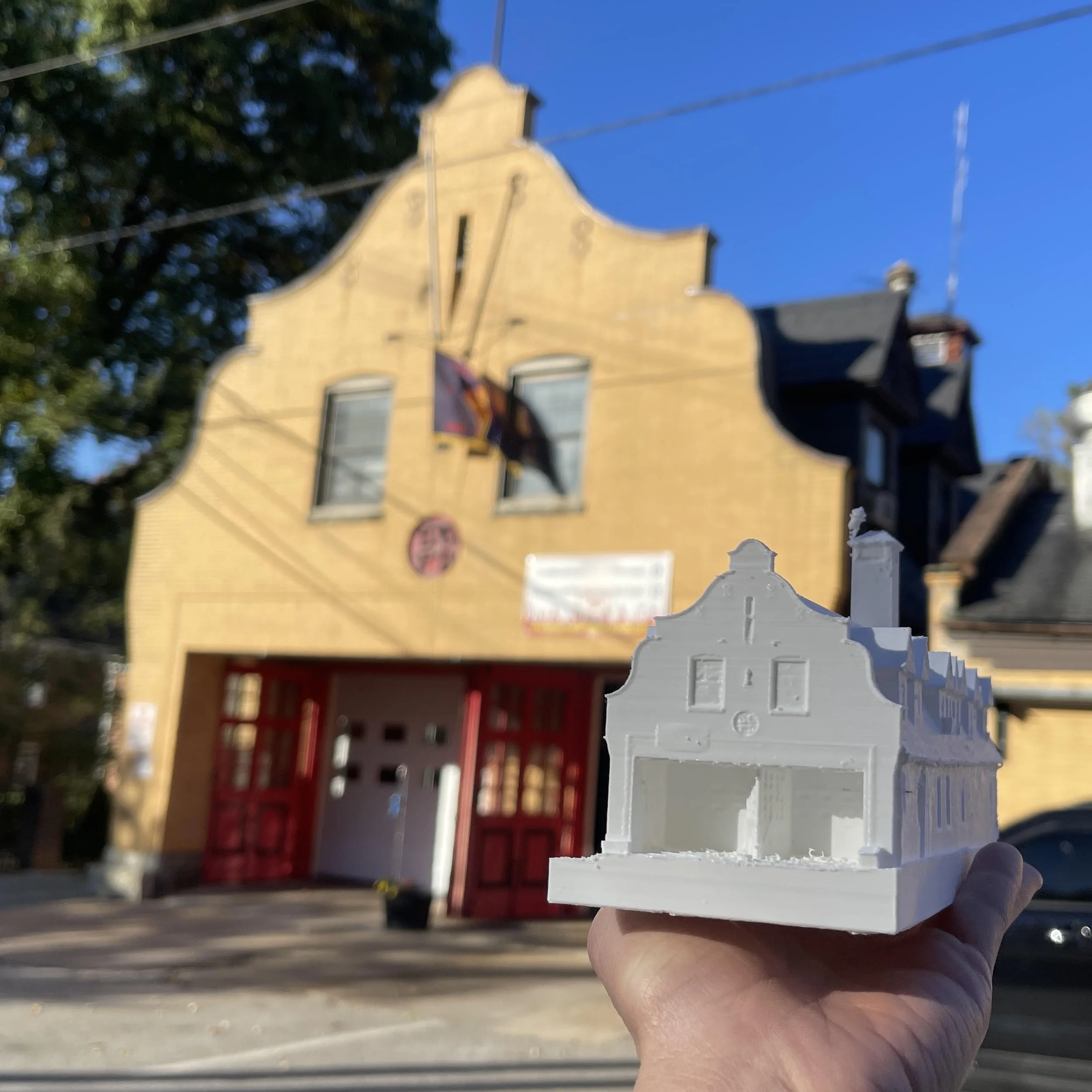
Fire Station No. 44
3D Print
Donated this print to the firemen!
The Roland Park Firehouse was constructed in 1895 and designed by Wyatt & Nolting. It is a combination of Tudor and Flemish style architecture. The “BCFD” stood for “Baltimore County Fire Station” before Baltimore City annexed this region in 1919.
Address: 2 Upland Road, Baltimore, MD 21210
Fire Station No. 6
The Independent Fire Company house was founded in 1799 and stands as one of the oldest volunteer firehouses in Baltimore City. It was designed by Baltimore architects William H. Reasin and Samuel B. Wetherald. The firehouse was built in the Italian Gothic style. Its 103 foot bell tower took inspiration from Giotto’s tower in Florence, Italy. The station remained in active service until 1976. A few years later, the old station became the Baltimore City Fire Museum.
Address: 414 Old Town Mall, Baltimore, MD 21202
Fire Station No. 38
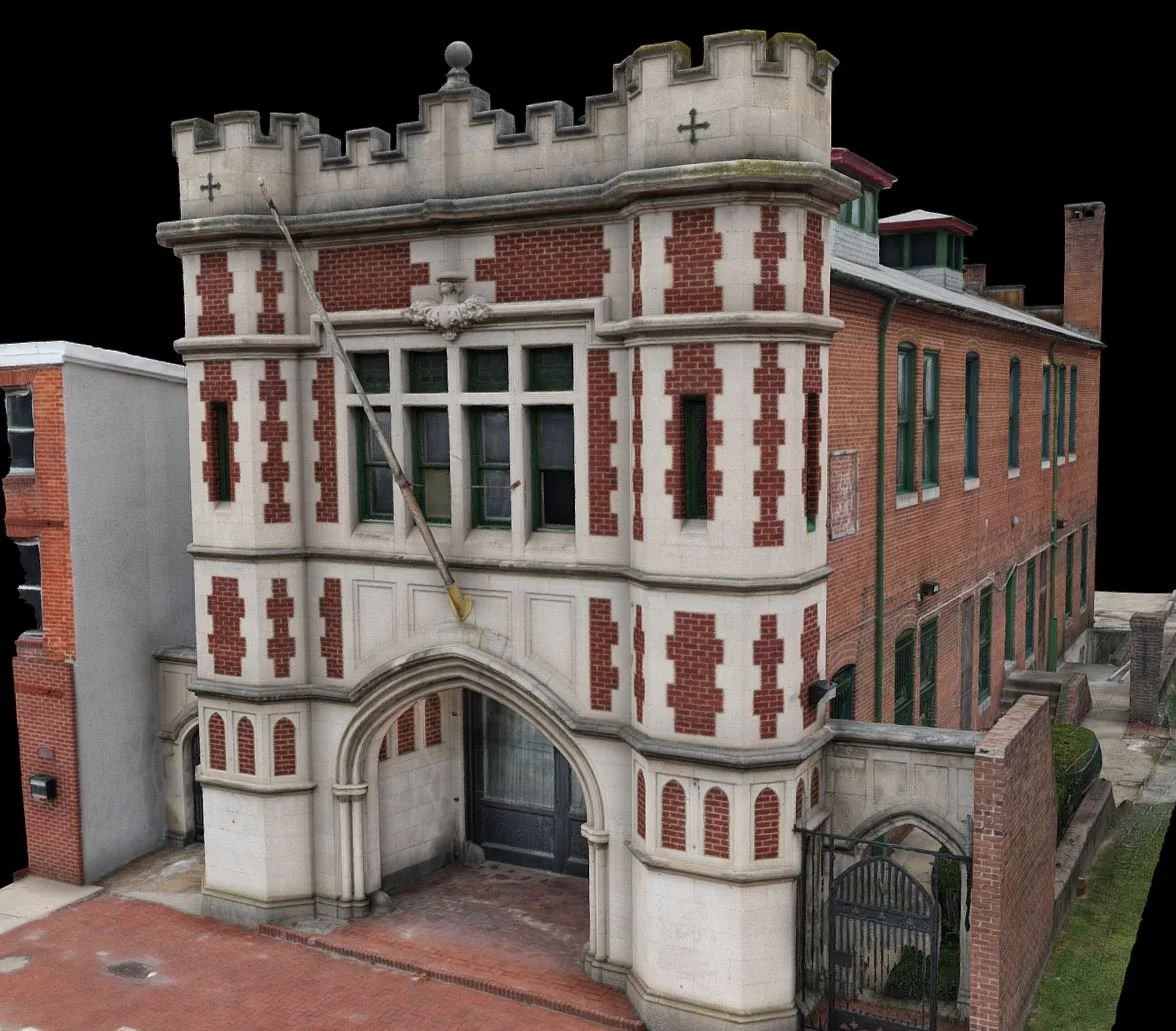
The Poppleton fire station, former Engine Company #38, opened in 1910 in Baltimore City at the intersection of West Baltimore St and the Harbor City Boulevard. This Tudor Revival building was designed by local architects Benjamin Buck Owens and Spencer E. Sisco. It remained active until 1978, but now remains vacant.
Address: 756 W. Baltimore St.
Fire Station No. 34
3D Print
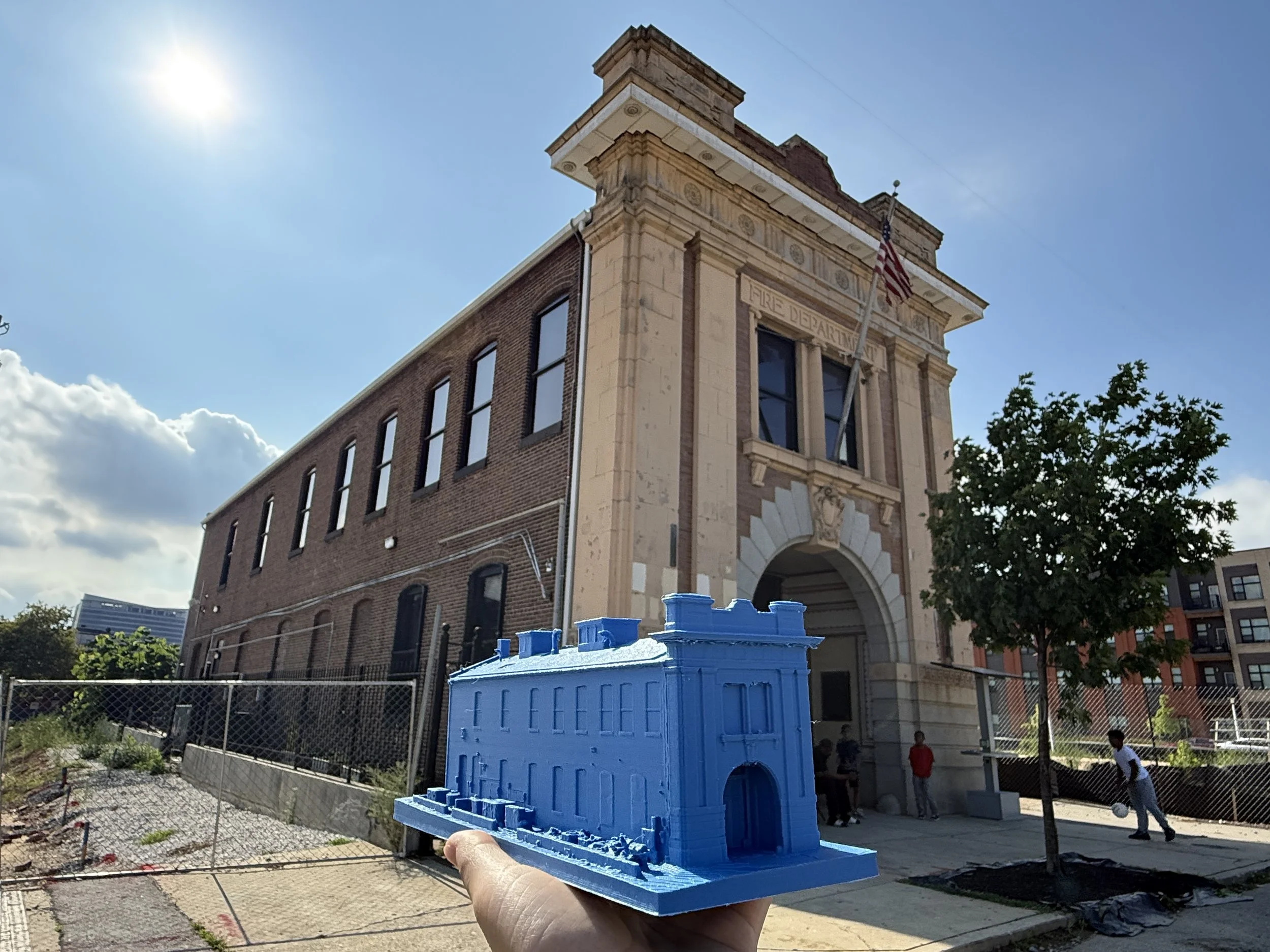
Donated to Living Classrooms, LLC
On the 300 Block of S Caroline St, Engine Company 34 opened their doors on July 8, 1910. It housed one of the oldest fire engines in the United States. The horse stables can still be seen in the lower level.
Present day, it is POWER House community center run by Living Classrooms providing GED prep classes, job training courses, and ESL. They also run a Teen Club equipping high school students with academic support and after school activities.
Fire Station No.51
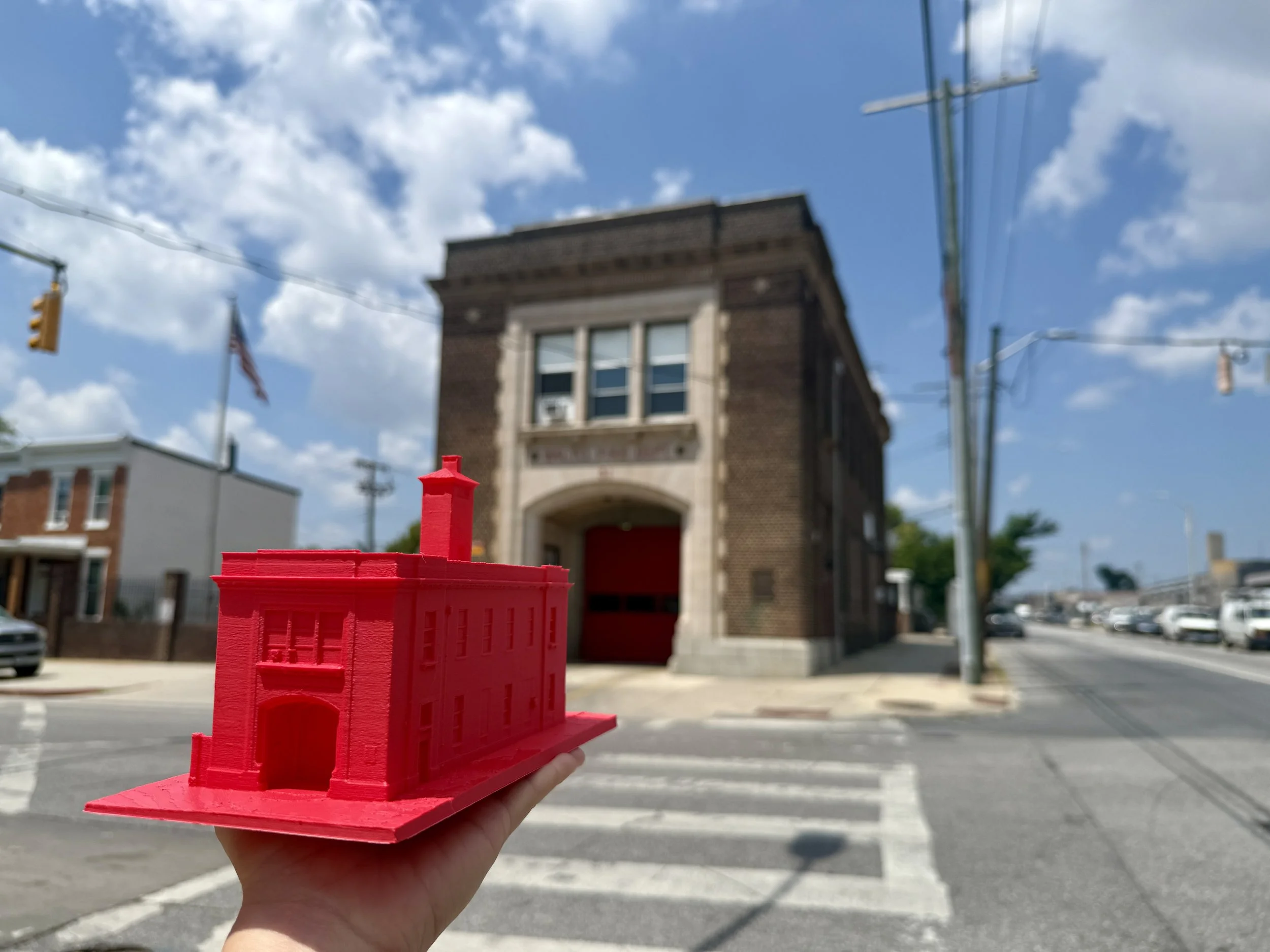
3D Print
This print was donated to the firemen of Station no. 51
Engine 51 opened in 1921 as the city was annexing more of the county. The station was one of the first three stations to be built specifically for mechanized fire equipment.
Over the years, the station became more modernized and became a pillar of the Ellwood Park community. In 2000, the city closed a large number of fire stations . This move pushed 51 engine to be one of the busiest engines in the city.
51 engine currently has 20 members assigned, split between 4 shifts.
The station prides itself on being one of the cleanest and most up-kept fire houses in the city. To be a member here, you are not only agreeing to serve the city but also agreeing to maintain the station.
Fire Station No. 1
323 North Paca Street, originally Engine Firehouse No. 1, was first opened on Dec. 21st, 1908. It was built as part of the city wide effort to expand the fire department subsequent to the Great Baltimore Fire of 1904. The building is now converted for commercial use.
Fire Station No. 16
This historic Baltimore firehouse opened in 1908. It remained an active fire station until 1989. Truck 16 was built at the peak of the most intensive period of expansion ever within the Baltimore City Fire Department. This expansion was initiated by the Great Fire of 1904, which destroyed more than 1,500 buildings, 1,000 severely damaged, and over $100 million of property loss. After this tragic event, the city committed to upgrading the fire department doubling the engine houses in five years.
Fire Station No.32
Fire station no. 32 was constructed in 1907, after the Great Baltimore Fire of 1904. At 10:50am on February 7, 1904, a small fire in the business district rapidly spread throughout a large portion of the city by the evening. When the blaze was finally extinguished, “an 80-block area of the downtown area, stretching from the waterfront to Mount Vernon on Charles Street, had been destroyed” (History.com). Consequently, Baltimore City erected dozens of new fire stations after this event. More recently, the interior was completely renovated in 1984 to an office building, and in 1997 to house Baltimore City College.